
Fall pruning can protect your trees, preserve your landscape’s structure, and prepare your property for a stronger spring. The wrong cut, however, can remove next year’s flowers, weaken a mature tree, or leave fresh wounds vulnerable during Ontario’s freeze-thaw cycles.
Have you ever trimmed a shrub in October because it looked overgrown, only to discover bare branches and missing blooms the following spring? Or removed a large limb without realizing that the cut could affect the tree’s long-term structure?
Fall creates an excellent pruning opportunity for the right plants and the right work. It also creates several costly mistakes.
This guide covers the five most common fall pruning errors Ontario homeowners and property managers make, and the expert approach that prevents them.
Know the Right Fall Pruning Window
The best fall pruning starts with timing, not tools.
In Southern Ontario, a practical dormant-season window usually begins after deciduous plants lose their leaves and stop producing active growth. For many trees and non-spring-flowering shrubs, that means late November through February, before spring bud swell.
However, September and early October often create poor pruning conditions. Plants may still push tender new growth after a cut, and that growth may not harden before cold weather arrives.
Use this general guide:
- Early fall: Avoid major pruning and aggressive size reduction.
- Late fall after leaf drop: Assess structure and remove dead, damaged, or hazardous wood.
- Dormant season: Complete selective structural pruning on suitable trees and shrubs.
- Spring-flowering shrubs: Complete major pruning immediately after flowering, not in fall.
- Any season: Address urgent hazards, storm damage, or dangerous branches with professional guidance.
Landscape Ontario’s pruning guidance reinforces the importance of matching pruning timing to the plant’s flowering habit.

Mistake #1: Pruning Spring-Flowering Shrubs in Fall
Fall pruning can remove the flower display you expect next spring.
Many spring-flowering shrubs produce their flower buds on older wood during the previous growing season. By fall, those buds already sit on the branches, waiting for spring.
When you prune a lilac, forsythia, weigela, viburnum, purpleleaf sandcherry, or rhododendron in autumn, you may remove the very buds that would create next year’s blooms.
The correct approach:
- Prune lilacs after flowering in late spring.
- Prune forsythia within several weeks after it finishes blooming.
- Remove spent flowers and selectively thin older stems after flowering.
- Reserve fall work for dead, broken, diseased, or clearly hazardous branches.
- Accept some bloom loss if safety requires immediate removal.
Toronto Master Gardeners specifically recommend pruning spring-flowering shrubs after they bloom and caution against late-fall pruning that can stimulate tender growth or remove future flowers. Read their Ontario guidance on hard pruning flowering shrubs.
Not sure which type of hydrangea or flowering shrub grows on your property? Avoid guessing. Different cultivars follow different pruning patterns, and a plant-specific assessment protects both its structure and its seasonal performance.
Mistake #2: Making Heavy Cuts Too Late
A dramatic late-season cut can leave a plant stressed just before Ontario’s harshest weather.
Late fall pruning does not automatically damage a tree or shrub. In fact, properly timed dormant pruning can support healthier structure. The risk comes from performing heavy reduction when the plant still actively grows, or just before severe cold arrives.
Large, fresh cuts can remain exposed through freeze-thaw cycles. The plant cannot immediately seal the wound like human skin. Instead, it gradually compartmentalizes the affected wood over time. The quality, location, and size of the cut all influence that process.
Avoid late-season heavy pruning that:
- Removes a large percentage of the canopy at once.
- Stimulates soft, late-season growth.
- Leaves extensive fresh cuts just before a hard freeze.
- Strips a shrub or tree of too much stored energy.
- Creates unnecessary stress on already weakened plants.
For shrubs, removing more than approximately one-third of the plant in one season often creates excessive stress. A qualified professional may recommend staged rejuvenation over two or three seasons instead of one aggressive cut.
The better strategy: complete light corrective work in late fall, then schedule major structural pruning during the proper dormant window, or after flowering, depending on the plant.
Mistake #3: Removing the Wrong Branches
Good pruning improves structure. Random pruning creates future problems.
Many homeowners start with the branches that look inconvenient rather than the branches that create structural weakness. That approach can leave the tree unbalanced, encourage weak regrowth, or expose the trunk and major limbs to unnecessary stress.
Start with a clear inspection. Look for:
- Dead or broken branches.
- Diseased wood.
- Branches that cross and rub.
- Weakly attached stems.
- Branches growing inward toward the trunk.
- Water sprouts and unwanted suckers.
- Limbs that interfere with buildings, walkways, lighting, or sightlines.
- Competing leaders that create poor trunk structure.
Then preserve the tree’s natural form. Avoid removing healthy branches simply because they appear long or inconvenient.
A proper pruning cut respects the branch collar. The swollen area where the branch connects to the trunk or a larger limb. Cut just outside the collar. Do not cut flush against the trunk, and do not leave a long stub.
For larger limbs, professional arborists often use a three-cut method:
- Make an undercut to prevent bark tearing.
- Make a top cut farther out to remove the branch’s weight.
- Complete the final cut just outside the branch collar.

These details matter on premium residential properties and multi-residential sites alike. One poorly positioned cut can alter the appearance and strength of a tree for years.
Mistake #4: Topping Trees or Shearing Them Into Submission
Topping is not structural pruning. It is a damaging shortcut.
Topping removes large sections of a tree’s crown and leaves blunt stubs. The tree responds with weak, fast-growing shoots that often attach poorly. Those shoots can create denser, more hazardous growth and force you to repeat the work sooner.
Topping can also:
- Reduce the tree’s natural form.
- Increase decay risk.
- Expose limbs to sun damage.
- Create weakly attached regrowth.
- Increase long-term maintenance costs.
- Reduce the property’s visual quality.
Shearing creates similar problems when homeowners apply hedge-trimmer techniques to trees or naturally shaped shrubs. Formal hedges may require shearing, but trees need selective structural pruning. Shrubs often benefit from thinning individual stems rather than cutting every branch to the same height.
The goal should never equal “make everything smaller.” The goal should equal:
- Preserve a balanced canopy.
- Maintain strong branch attachments.
- Improve clearance safely.
- Increase light and air movement where appropriate.
- Protect the plant’s natural character.
- Support long-term health and appearance.
For a deeper explanation of topping risks, consult the International Society of Arboriculture’s Why Topping Hurts Trees resource.
Mistake #5: Skipping an ISA-Certified Arborist for Large or Hazardous Trees
Large trees demand expert assessment, specialized equipment, and a safety plan.
A homeowner may safely prune a small ornamental shrub with clean, sharp hand tools. A mature tree near a roof, driveway, utility line, road, or occupied building creates a completely different risk profile.
Call an ISA-certified arborist when the work involves:
- Large or mature trees.
- Limbs over structures or high-traffic areas.
- Cracks, cavities, visible decay, or other visible defects.
- Dead branches above walkways or parking areas.
- Storm-damaged trees.
- Utility conflicts.
- Climbing, rigging, bucket trucks, or chainsaws.
- Multi-residential or commercial properties where public safety matters.

A certified arborist evaluates the tree’s species, age, structure, defects, surrounding targets, and pruning needs before recommending work. ISA’s tree-owner resources also explain why qualified tree care protects both people and valuable landscape assets.
Get Fall Pruning Right With Paramount Landscaping
Your property deserves more than quick trimming. It deserves a meticulous plan that protects its appearance, safety, and long-term value.
Paramount Landscaping provides Shrub and Hedge Maintenance as part of a broader suite of premium landscaping services. Our team includes an ISA-certified arborist on staff, ensuring your pruning plan reflects plant biology, structural requirements, and Ontario growing conditions.
Our approach delivers:
- Selective Hedge Pruning that preserves form without damaging healthy growth.
- Structural Tree Pruning that removes problem branches while protecting natural architecture.
- Seasonal Timing that matches the plant, pruning objective, and weather conditions.
- Hazard Assessment for large, mature, or difficult-to-access trees.
- Clear Communication through accountable, transparent service.
- Year-Round Coordination with garden maintenance and property maintenance services.
For homeowners, that means a stunning landscape that enters spring with stronger structure and better flowering potential. For property managers, it means reliable commercial landscaping support across entrances, courtyards, walkways, parking areas, and multi-residential grounds.
We believe expert pruning should solve problems before they become expensive. The right cut today protects your property’s beauty, safety, and performance next spring.
Fall Pruning Checklist
Before you cut, ask:
- Has this plant finished growing for the season?
- Does it flower on old wood or new wood?
- Am I removing a hazard, or simply trying to reduce size?
- Am I preserving the branch collar?
- Will this cut improve structure?
- Can I complete the work safely from the ground?
- Does the branch sit near a building, utility line, road, or walkway?
- Would an ISA-certified arborist provide a safer and more accurate solution?
If you cannot answer those questions confidently, put down the saw. Professional pruning remains a cut above the rest because it protects the tree you see today, and the landscape you want to enjoy next spring.
Snow Removal Contracts: What Property Managers Should Confirm Before the First Storm
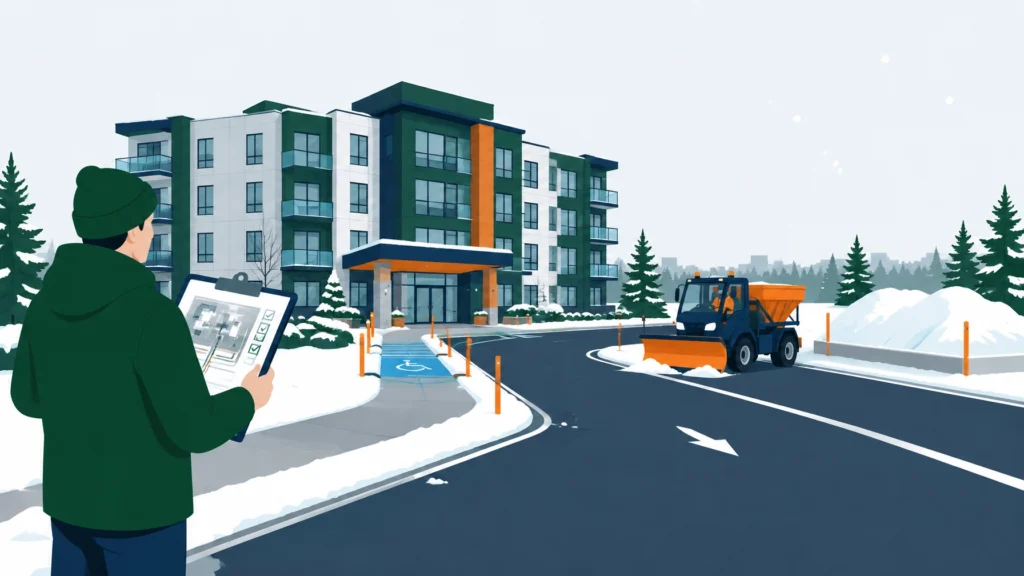
A strong snow removal contract turns winter expectations into a clear operating plan. With late October already here, commercial and multi-residential property managers have a narrow window to confirm how their provider will handle the first storm, and the changing conditions that follow. A seasonal agreement should do more than list “plowing and salting.” It […]
Retaining Wall Installation 101: Solving Ontario Clay Soil and Drainage for Good

A retaining wall does far more than create a beautiful garden edge. It holds soil in place, manages grade changes, controls runoff, and protects the features that make your property valuable, including foundations, driveways, patios, walkways, and planting beds. In Ontario, retaining wall installation demands more than attractive blocks and a clean finish. Clay soil […]
Is Your Property Draining? 6 Warning Signs to Fix Before Winter Locks Them In
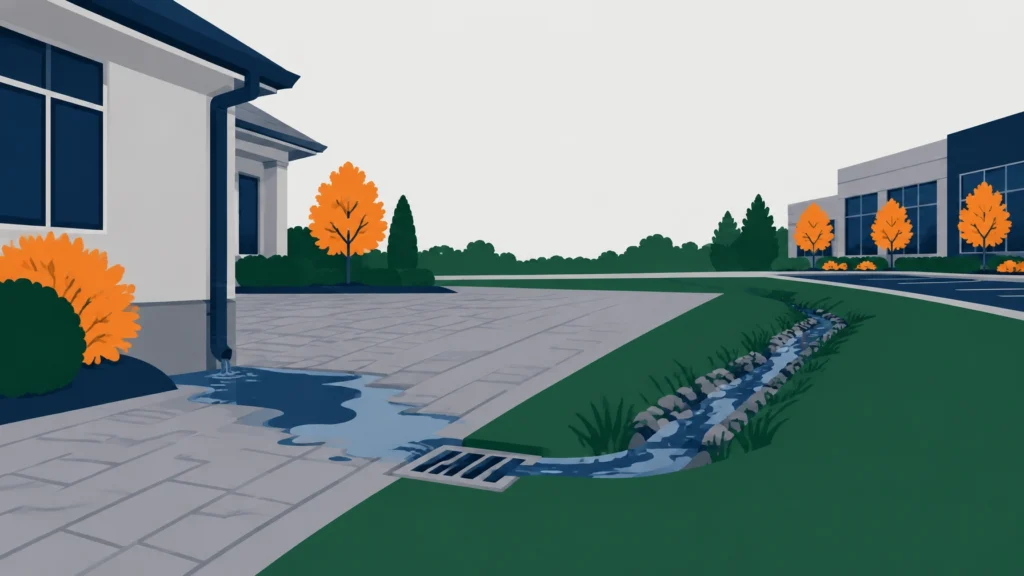
Ontario properties face a serious drainage test every fall. Heavy rain saturates the ground, clay soil holds moisture, and freeze-thaw cycles turn small grading problems into major repairs. The right time to identify drainage problems is before winter locks them into the ground. Have you noticed puddles that linger after rain? Does one corner of […]
Mulch Now, Save Later: The Fall Mulching Strategy Ontario Properties Need Before the Frost
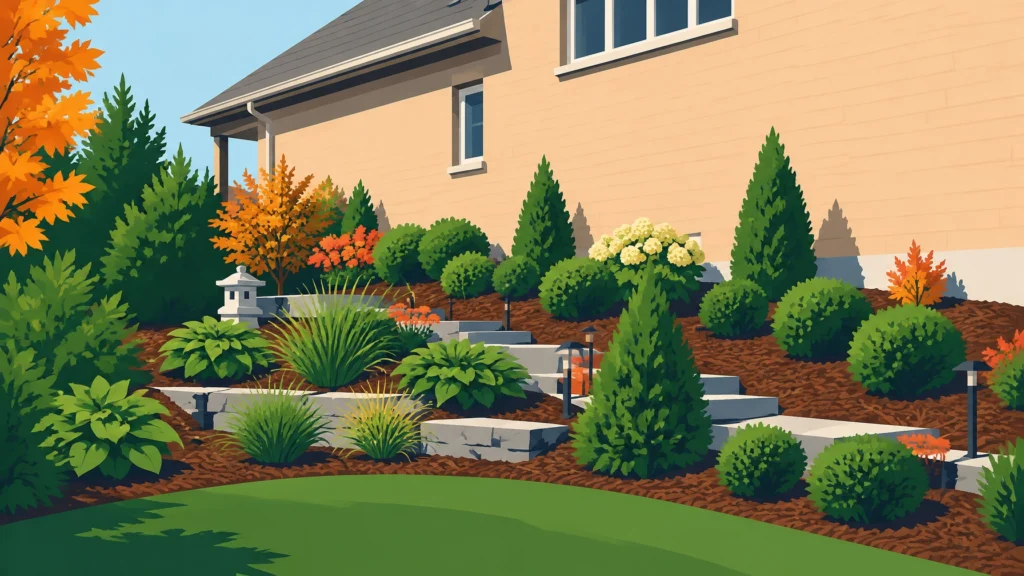
Fall mulch does more than improve curb appeal. Applied at the right time and depth, it protects roots, stabilizes soil temperatures, retains moisture, suppresses weeds, and strengthens your landscape before Ontario’s freeze–thaw cycles begin. For premium residential, multi-residential, commercial, and industrial properties, fall mulching represents a practical soil-health investment. It supports healthier plants next spring […]
Fall Cleanup Isn’t Just Raking: Why a Professional Cleanup Protects Your Property All Winter
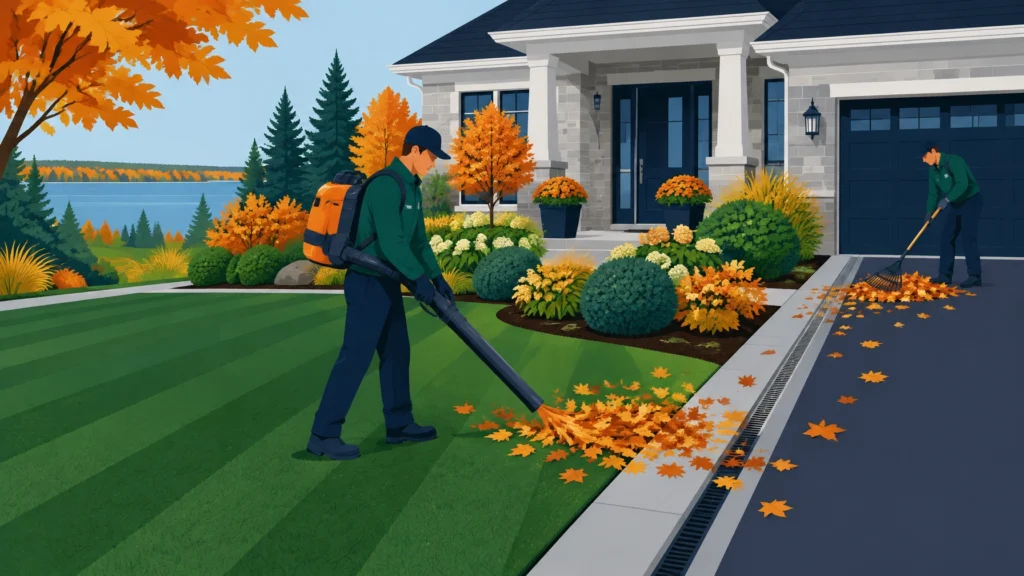
A proper fall cleanup does more than make your property look tidy. It protects your lawn, gardens, drainage systems, and building from the problems that develop after autumn ends. Wet leaves, compacted debris, clogged drains, overgrown beds, and unfinished lawn care create avoidable risks across Ontario properties. A quick rake may improve appearances for a […]
5 Steps to a Smarter Landscape in Ontario: Smart Irrigation That Saves Water and Money

A thriving Ontario landscape needs precision: not guesswork. Smart irrigation delivers the right amount of water to the right zone at the right time, helping your lawn and gardens stay lush while reducing waste and controlling outdoor water costs. Ontario summers now bring sharper swings between heavy rainfall, prolonged dry periods, and intense heat. A […]
How to Winterize Your Ontario Landscape in 7 Steps (Before the First Frost)
Your landscape needs a deliberate fall strategy : not a rushed cleanup after the first frost. In Ontario, September marks the ideal time to prepare your lawn, gardens, irrigation system, trees, hardscapes, and water features for the months ahead. Have you ever watched a healthy summer lawn thin out after winter? Have freeze-thaw cycles opened […]
Why GPS-Tracked Landscaping Services are a Game Changer for Property Management

Have you ever found yourself questioning if your landscaping crew actually showed up when they said they did? As a property manager, your time is a premium commodity. You shouldn't have to spend it chasing down contractors, verifying timestamps, or mediating disputes between tenants and service providers. The "trust me" era of property maintenance is […]
The Ultimate Guide to Premium Landscape Construction: Succeeding in 2026

Exceptional landscapes don't happen by accident. In 2026, the gap between "standard" landscaping and premium landscape construction has never been wider. While others are still stuck in the past with basic sod and generic pavers, Paramount Landscaping Inc. is defining the future of outdoor living. Your property is an investment, a sanctuary, and a reflection […]